
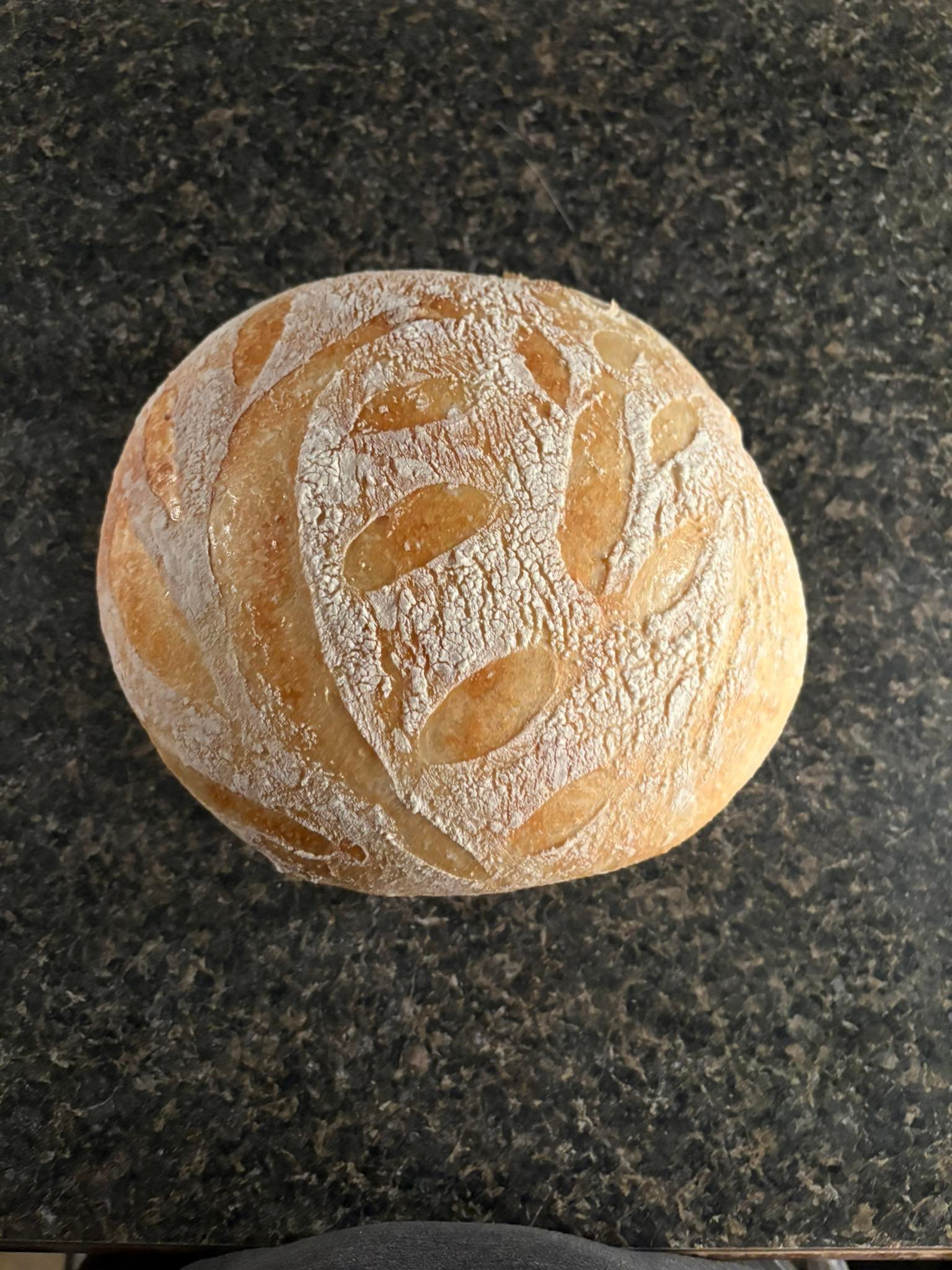
Classic Artisan Sourdough Bread Recipe 🥖✨
There’s something truly special about a beautiful homemade sourdough loaf with a crisp golden crust and soft airy center. This artisan sourdough bread is simple, rustic, and packed with rich flavor developed through slow fermentation. The decorative scoring on top gives the loaf a bakery-style appearance while the inside stays chewy, light, and full of beautiful air pockets.
This bread is perfect for sandwiches, toast, soups, or simply enjoying warm with butter. The slight tang from the sourdough starter creates deep flavor that regular bread simply cannot match.
Whether you’re new to sourdough baking or already love making homemade bread, this recipe creates a gorgeous artisan loaf every time.
Why You’ll Love This Sourdough Bread
This loaf is:
- Crispy and golden outside
- Soft and airy inside
- Naturally fermented
- Full of rich sourdough flavor
- Beautifully scored
- Perfect for beginners and experienced bakers
The slow fermentation creates incredible texture and flavor while keeping the bread fresh longer.
Ingredients
For the Dough
- 100g active sourdough starter
- 350g warm water
- 500g bread flour
- 10g salt
That’s it — just four simple ingredients create amazing artisan bread.
Step-by-Step Instructions
Step 1: Feed Your Starter
Feed your sourdough starter 4–6 hours before baking.
Your starter should look bubbly, active, and doubled in size.
An active starter is the key to beautiful bread rise and airy texture.
Step 2: Mix the Dough
In a large bowl combine:
- Active sourdough starter
- Warm water
Mix until cloudy.
Add bread flour and salt.
Stir until all the flour is hydrated and a shaggy dough forms.
The dough will feel sticky and rough at first.
Cover and let rest for 30 minutes.
This resting period is called autolyse and helps improve gluten development.
Step 3: Stretch and Fold
After resting, begin stretch-and-folds.
Grab one side of the dough, stretch upward, and fold it over itself.
Rotate the bowl and repeat on all four sides.
Repeat this process every 30 minutes for about 2 hours.
The dough will become smoother, stronger, and more elastic after each fold.
Step 4: Bulk Fermentation
Cover the dough and let it rise at room temperature for 4–6 hours.
The dough should become airy, puffy, and slightly jiggly.
Fermentation time depends on your kitchen temperature.
Slow fermentation develops the best flavor.
Step 5: Shape the Dough
Turn the dough onto a lightly floured surface.
Shape it gently into a round loaf.
Use your hands to create surface tension without deflating the dough completely.
Place the shaped dough seam-side up into a floured proofing basket or bowl lined with a towel.
Step 6: Cold Fermentation
Cover and refrigerate overnight.
This slow cold fermentation creates:
- Better flavor
- Beautiful crust
- Easier scoring
- Improved texture
Cold dough is also easier to handle before baking.
Step 7: Score the Bread
Preheat your oven to 475°F (245°C) with a Dutch oven inside.
Carefully place the dough onto parchment paper.
Use a bread lame or sharp knife to score decorative patterns into the top.
Scoring helps control how the bread expands during baking.
Beautiful scoring creates the classic artisan appearance.
Step 8: Bake the Bread
Transfer the dough into the hot Dutch oven.
Cover with the lid and bake for 25 minutes.
Remove the lid and bake another 15–20 minutes until deeply golden brown.
The crust should look crisp and beautifully blistered.
Your kitchen will smell incredible.
Step 9: Cool Before Slicing
Allow the loaf to cool completely before slicing.
This step is very important because the inside continues setting while cooling.
Cutting too early may make the crumb gummy.
Tips for Perfect Sourdough Bread
Use Bread Flour
Bread flour gives better gluten strength and chewy texture.
Don’t Rush Fermentation
Slow fermentation creates the best flavor and airy crumb.
Use a Dutch Oven
A Dutch oven traps steam which helps create a crispy artisan crust.
Practice Scoring
Decorative scoring improves with practice and makes your bread look professional.
Why Homemade Sourdough Is Special
Homemade sourdough contains natural fermentation that creates:
- Better flavor
- Chewier texture
- Crisp crust
- Longer freshness
Many people also find sourdough easier to digest compared to regular bread.
Serving Suggestions
This artisan loaf tastes amazing with:
- Butter
- Olive oil
- Soup
- Sandwiches
- Avocado toast
- Jam and honey
It’s delicious both fresh and toasted.
Storage Instructions
Room Temperature
Store wrapped in a bread bag or towel for up to 3 days.
Freezer
Slice and freeze for up to 2 months.
Toast slices directly from frozen.
Common Sourdough Mistakes
Dense Bread
Usually caused by inactive starter or under-fermentation.
Flat Loaf
The dough may have over-proofed or lacked enough tension during shaping.
Gummy Texture
Bread was sliced before fully cooling.
Final Thoughts
This Classic Artisan Sourdough Bread is rustic, beautiful, and deeply flavorful. With its crisp golden crust, soft airy crumb, and elegant scoring, it looks and tastes like bakery-quality bread made right at home.
Every loaf tells a story of patience, fermentation, and homemade comfort.
Once you bake your own sourdough bread, store-bought bread will never taste the same again.
So feed your starter, dust your counter with flour, and enjoy the magic of homemade artisan sourdough today 🥖✨